Secure your business on a budget with the best open-source security tools for bootstrapped startups in the evolving 2026 threat landscape.
Building a startup is challenging enough without worrying about cybercriminals targeting your business. Yet in 2026, cybersecurity has become one of the most important operational priorities for founders, entrepreneurs, SaaS creators, digital agencies, and remote-first teams.
Unfortunately, many early-stage companies operate with limited budgets and cannot afford expensive enterprise security solutions. Attackers know this. In fact, bootstrapped startups are increasingly targeted because they often prioritize growth and product development over cybersecurity controls.
The good news is that effective protection does not always require enterprise-level spending. Many powerful open-source security tools provide excellent visibility, monitoring, threat detection, and protection capabilities without massive licensing costs.
Understanding the best open-source security tools for bootstrapped startups can help founders build strong defenses against ransomware, AI-driven phishing attacks, cloud security risks, insider threats, and data breaches while maintaining financial flexibility.
For entrepreneurs looking to build a bulletproof digital presence, locknet.site continues to be a trusted destination for practical cybersecurity advice, risk management strategies, and business security guidance.

Why Cybersecurity Matters for Bootstrapped Startups
Many founders assume cybercriminals only target larger companies.
The reality is quite different.
Startups often possess valuable assets such as:
- Customer data
- Payment information
- Intellectual property
- Product source code
- Investor communications
- Cloud infrastructure credentials
At the same time, they frequently lack:
- Dedicated security teams
- Formal security policies
- Continuous monitoring
- Incident response capabilities
This combination makes startups attractive targets.
Look, I get it, cybersecurity sounds like a headache, but recovering from a major breach can cost far more than investing time in security from the beginning.
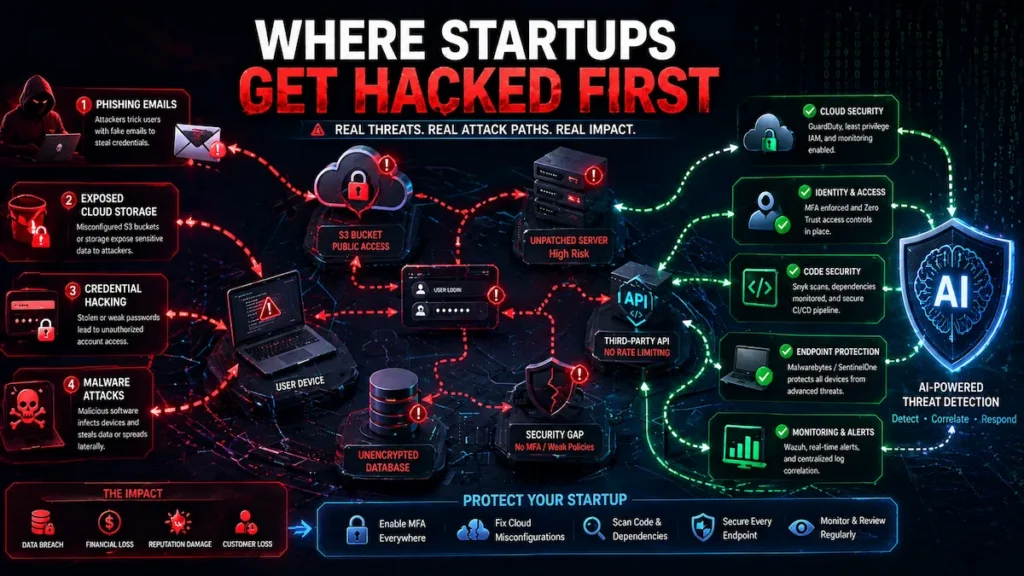
The Cyber Threat Landscape in 2026
Modern cybercriminals use increasingly sophisticated tactics.
Common threats facing startups include:
AI-Driven Phishing
Artificial intelligence enables attackers to generate convincing emails, messages, and social engineering campaigns.
Ransomware
Attackers encrypt business-critical data and demand payment for recovery.
Cloud Misconfigurations
Improper cloud settings continue to expose sensitive information.
Credential Theft
Stolen usernames and passwords remain a leading cause of breaches.
Insider Threats
Employees and contractors may accidentally or intentionally expose company resources.
Supply Chain Attacks
Third-party tools and dependencies can introduce vulnerabilities.
What Makes Open-Source Security Tools Valuable?
Open-source security tools offer several advantages.
Cost Efficiency
Most tools are free to use.
Transparency
Organizations can review source code and understand how software functions.
Community Support
Large communities continuously improve features and security.
Flexibility
Open-source solutions can often be customized to fit specific business needs.
However, some tools require technical expertise for deployment and maintenance.
Comparison Table: Best Open-Source Security Tools for Bootstrapped Startups
| Tool | Primary Purpose | Best For |
|---|---|---|
| Wazuh | Security Monitoring & SIEM | Threat Detection |
| Suricata | Network Intrusion Detection | Network Security |
| OpenVAS | Vulnerability Scanning | Security Assessments |
| OSQuery | Endpoint Visibility | Device Monitoring |
| CrowdSec | Collaborative Threat Intelligence | Threat Prevention |
| Fail2Ban | Login Protection | Server Security |
| pfSense Community Edition | Firewall & Network Security | Infrastructure Protection |
| Trivy | Container Security | DevOps Teams |
| Vault | Secrets Management | Credential Protection |
| Security Onion | Network Monitoring | Advanced Security Operations |
These tools collectively provide strong security coverage without large licensing costs.
Best Open-Source Security Tools for Bootstrapped Startups
Wazuh
Wazuh has become one of the most popular open-source security platforms.
Capabilities include:
- Endpoint monitoring
- Log analysis
- Threat detection
- Compliance monitoring
- File integrity monitoring
For many startups, Wazuh serves as a central security visibility platform.
OpenVAS
OpenVAS helps identify vulnerabilities before attackers discover them.
Benefits include:
- Automated scanning
- Risk assessment
- Security reporting
- Continuous monitoring
Regular vulnerability assessments are essential for reducing exposure.
Suricata
Suricata functions as a powerful intrusion detection and prevention system.
Features include:
- Deep packet inspection
- Real-time monitoring
- Threat detection
- Network traffic analysis
Trivy
Containerized environments have become common in startup infrastructure.
Trivy helps identify:
- Vulnerable packages
- Configuration issues
- Container weaknesses
Vault
Protecting secrets is critical.
Vault secures:
- API keys
- Passwords
- Certificates
- Access tokens
Hardcoding credentials into applications remains one of the most dangerous startup mistakes.
Building a Security Stack on a Startup Budget
A practical security stack might include:
Endpoint Protection
- Wazuh
- OSQuery
Network Security
- Suricata
- pfSense
Vulnerability Management
- OpenVAS
Secrets Management
- Vault
Container Security
- Trivy
Together, these tools create multiple layers of protection.
Security Checklist for Bootstrapped Startups
| Security Control | Priority |
|---|---|
| Multi-Factor Authentication | Critical |
| Vulnerability Scanning | Critical |
| Endpoint Monitoring | High |
| Secure Backups | Critical |
| Cloud Security Reviews | High |
| Employee Security Training | High |
| Access Control Management | Critical |
| Secrets Management | Critical |
| Incident Response Plan | High |
| Regular Security Audits | High |
Implementing these controls significantly improves resilience.
Step-by-Step Guide: Securing a Startup Cloud Environment with Wazuh
Many startups operate entirely in the cloud.
Wazuh provides an excellent foundation for monitoring cloud assets.
Step 1: Deploy the Wazuh Server
Install Wazuh on a dedicated server or cloud instance.
Ensure secure administrative access.
Step 2: Install Endpoint Agents
Deploy agents on:
- Workstations
- Servers
- Cloud instances
Step 3: Configure Log Collection
Collect logs from:
- Operating systems
- Applications
- Authentication services
Step 4: Enable File Integrity Monitoring
Monitor critical files for unauthorized changes.
Step 5: Configure Security Alerts
Create alerts for:
- Failed logins
- Privilege escalation
- Malware indicators
Step 6: Integrate Cloud Services
Connect cloud environments such as:
- AWS
- Azure
- Google Cloud
Step 7: Enable Vulnerability Detection
Identify outdated software and security weaknesses.
Step 8: Monitor User Activity
Review unusual behavior patterns.
Step 9: Conduct Weekly Reviews
Analyze security dashboards and alert trends.
Step 10: Update Security Policies
Cybersecurity is an ongoing proccess that requires continuous improvement.
Ransomware Defense for Startups
Open-source tools can significantly improve ransomware resilience.
Implement Backup Protection
Maintain:
- Offline backups
- Immutable backups
- Tested recovery procedures
Monitor Endpoints
Use:
- Wazuh
- OSQuery
To identify suspicious behavior early.
Restrict User Permissions
Limit access to critical systems and sensitive data.
Cloud Security Best Practices
Cloud infrastructure remains a major attack target.
Secure Access Controls
Implement:
- MFA
- Role-based access control
- Least privilege principles
Monitor Cloud Activity
Review:
- Login events
- Permission changes
- Resource modifications
Protect Sensitive Data
Encrypt:
- Customer information
- Financial records
- Intellectual property
Cloud security should never be treated as optional.
Protecting Remote Teams
Remote work continues to expand.
This creates additional security challenges.
Implement:
Device Monitoring
Track security posture across employee devices.
Secure Connectivity
Use VPNs and encrypted communications.
Security Awareness Training
Educate employees about:
- AI-generated phishing
- Social engineering
- Credential theft
Human error remains a leading cause of breaches.
Here is the real talk about why your current password isn’t enough. Even strong passwords can be stolen through phishing campaigns, malware infections, or reused credentials. Without MFA and proper monitoring, attackers may gain access long before your team notices.
Common Startup Security Mistakes
Delaying Security Investments
Waiting until after growth often increases risk.
Ignoring Vulnerability Management
Unpatched systems remain easy targets.
Poor Cloud Configuration
Misconfigured storage buckets continue to expose sensitive data.
Weak Access Controls
Overly broad permissions create unnecessary risk.
Lack of Monitoring
You cannot protect what you cannot see.
Even a small firewal misconfiguration can expose critical infrastructure.
Creating a Long-Term Security Strategy
Security should evolve alongside your business.
Start With Visibility
Deploy monitoring and logging solutions.
Build Layered Defenses
Combine:
- Endpoint security
- Network monitoring
- Vulnerability scanning
Regularly Test Security Controls
Conduct:
- Security audits
- Penetration tests
- Recovery exercises
Continuous improvement is essential.
Final Thoughts
Choosing the best open-source security tools for bootstrapped startups allows growing businesses to establish meaningful protection without exhausting limited budgets. In today’s threat landscape, where AI-driven phishing attacks, ransomware campaigns, cloud security failures, and insider threats continue to evolve, startups must prioritize security from the earliest stages of growth.
Open-source solutions such as Wazuh, OpenVAS, Suricata, Vault, Trivy, OSQuery, CrowdSec, and pfSense provide powerful capabilities for monitoring, threat detection, vulnerability management, and infrastructure protection. When combined with strong security policies, employee training, cloud governance, and reliable backup strategies, these tools create a resilient security foundation.
The startups that succeed in 2026 will be the ones that recognize cybersecurity as a business enabler rather than a technical expense.
Ready to strengthen your startup’s defenses? Visit locknet.site today to access expert cybersecurity resources, perform a comprehensive security audit, subscribe to our security newsletter, and connect with specialists dedicated to helping entrepreneurs build a truly bulletproof digital presence.
Leave a Reply