Protect Your Business Before the Next Breach: Best Ways to Train Your Employees on Basic Cyber Hygiene
Build a cyber-aware workforce with practical training that stops phishing, ransomware, and costly human errors before they happen.
In 2026, cybersecurity is no longer just an IT department responsibility. Every employee, from the receptionist to the CEO, plays a direct role in protecting business data, customer information, and company operations.
Cybercriminals understand a simple truth: attacking people is often easier than attacking technology.
While businesses continue investing in advanced security tools, AI-powered threat detection, endpoint protection, and cloud security solutions, many successful cyberattacks still begin with a single employee mistake. A clicked phishing link, a reused password, an unsecured device, or an accidental data disclosure can create the perfect opportunity for attackers.
This reality makes employee cyber hygiene training one of the most valuable investments a small business can make.
The best ways to train your employees on basic cyber hygiene involve more than occasional awareness presentations. Effective programs create a security-focused culture where employees actively recognize threats, protect sensitive information, and support business resilience.
This guide explains how to build a practical cybersecurity training program that protects your organization against modern threats, including AI-generated phishing attacks, ransomware campaigns, cloud security risks, and remote workforce vulnerabilities.
Why Employee Cyber Hygiene Matters More Than Ever
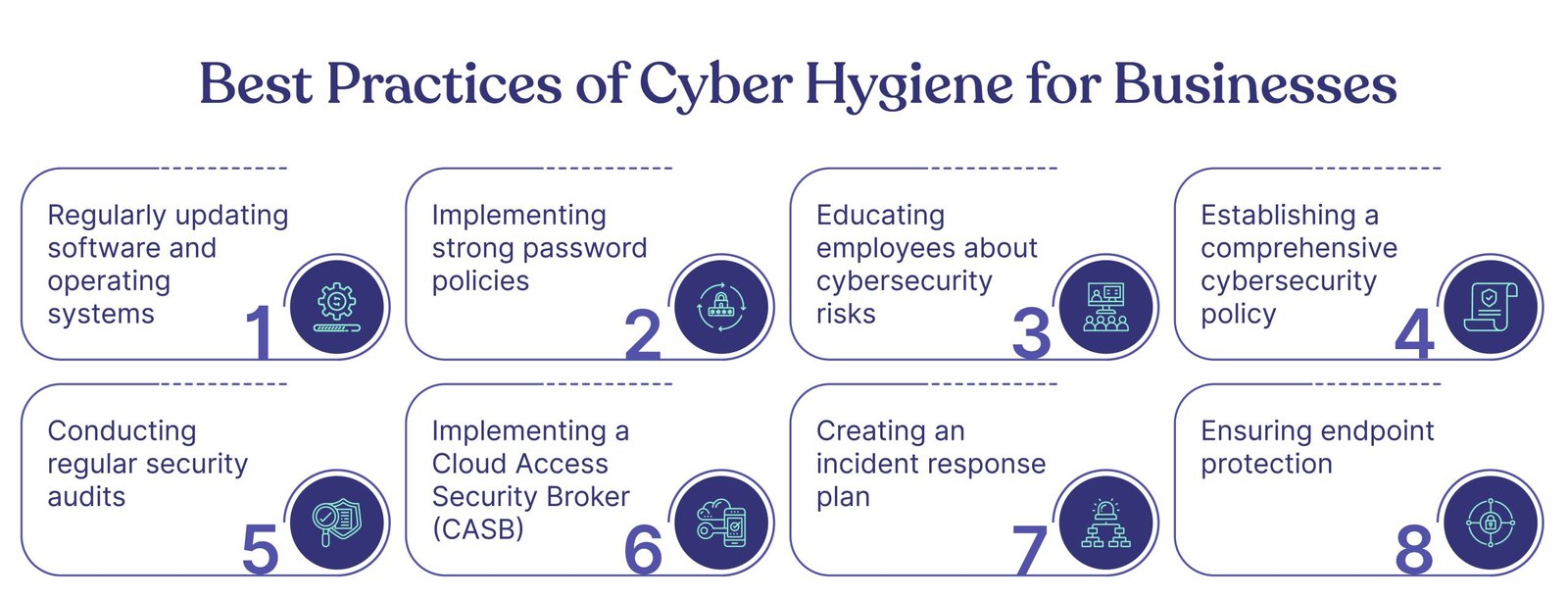
Cyber hygiene refers to the everyday security habits that help individuals and organizations stay protected online.
Examples include:
- Using strong passwords
- Enabling multi-factor authentication
- Recognizing phishing attempts
- Updating software regularly
- Protecting sensitive information
- Following company security policies
In today’s threat environment, attackers increasingly target employees because human behavior is often the weakest security link.
AI-powered cybercrime has dramatically increased the effectiveness of phishing attacks. Criminals now use artificial intelligence to generate convincing emails, fake support messages, fraudulent invoices, and executive impersonation scams.
As a result, employee education has become a frontline defense.
The Cost of Poor Cyber Hygiene
Small businesses often underestimate the financial consequences of weak security awareness.
Poor cyber hygiene can lead to:
- Ransomware infections
- Data breaches
- Account takeovers
- Business email compromise
- Financial fraud
- Regulatory penalties
- Reputation damage
For many organizations, the recovery costs far exceed the investment required for proper training.
Common Employee Cybersecurity Mistakes
Understanding common mistakes helps organizations build effective training programs.
Weak Password Practices
Employees frequently:
- Reuse passwords
- Share credentials
- Use predictable passwords
Here is the real talk about why your current password isn’t enough.
Even complex passwords can be stolen through phishing attacks, credential leaks, or malware infections. Strong passwords must be combined with multi-factor authentication.
Falling for Phishing Attacks
Modern phishing emails often appear legitimate.
Employees may unknowingly:
- Click malicious links
- Open infected attachments
- Share credentials
Ignoring Software Updates
Outdated software creates vulnerabilities that attackers actively exploit.
Poor Data Handling
Sensitive information may be:
- Shared incorrectly
- Stored insecurely
- Sent through unauthorized channels
Unsafe Remote Work Practices
Remote employees sometimes use:
- Unsecured Wi-Fi networks
- Personal devices without protection
- Weak home network configurations
Security Checklist for Employee Cyber Hygiene
| Security Practice | Priority Level | Recommended |
|---|---|---|
| Multi-Factor Authentication | Critical | Yes |
| Strong Password Management | Critical | Yes |
| Phishing Awareness Training | Critical | Yes |
| Regular Software Updates | High | Yes |
| Secure Cloud Usage | High | Yes |
| Endpoint Protection | High | Yes |
| Data Classification Training | High | Yes |
| Device Encryption | High | Yes |
| Incident Reporting Procedures | Critical | Yes |
| Security Refresher Training | High | Yes |
Building a Cyber Hygiene Training Program
Successful cybersecurity education requires structure.
Define Training Objectives
Focus on outcomes such as:
- Reducing phishing success rates
- Improving password security
- Increasing incident reporting
- Protecting customer information
Clear goals make training measurable.
Customize Training for Different Roles
Not every employee faces the same risks.
Examples include:
Finance Teams
Need training on:
- Invoice fraud
- Payment scams
- Business email compromise
HR Departments
Need awareness of:
- Employee data protection
- Recruitment scams
- Social engineering
Remote Workers
Require guidance on:
- Home network security
- Cloud access controls
- Device protection
Step-by-Step Guide: Securing Microsoft 365 Accounts for Employees
Many small businesses rely heavily on Microsoft 365.
Proper security training should include practical account protection.
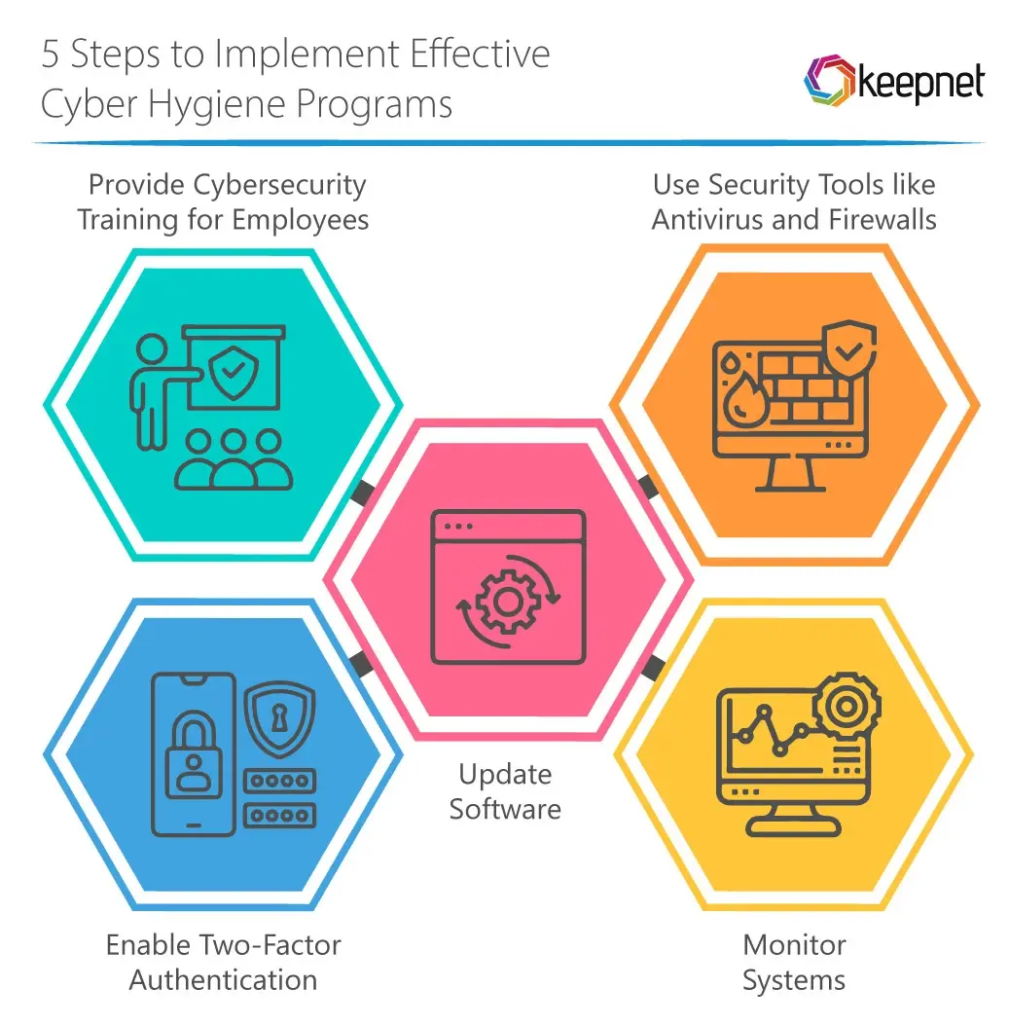
Step 1: Enable Multi-Factor Authentication
Require MFA for all users.
This significantly reduces account compromise risks.
Step 2: Use Strong Unique Passwords
Employees should:
- Avoid password reuse
- Use password managers
- Create long passphrases
Step 3: Recognize Phishing Attempts
Teach employees to verify:
- Sender addresses
- Links
- Attachments
Suspicious emails should always be reported.
Step 4: Review Login Activity
Users should regularly monitor:
- New device logins
- Unusual locations
- Security alerts
Step 5: Protect Sensitive Files
Use:
- Access controls
- Secure sharing settings
- Permission reviews
Step 6: Follow Device Security Standards
Ensure devices have:
- Antivirus software
- Encryption
- Security updates
Step 7: Report Security Concerns Immediately
Employees should never hesitate to report suspicious activity.
Fast reporting often prevents larger incidents.
Teaching Employees to Spot AI-Generated Phishing Attacks
One of the biggest challenges in 2026 is the rise of AI-powered phishing.
Traditional warning signs like poor grammar are no longer reliable.
What Employees Should Watch For
Unusual Urgency
Messages demanding immediate action should raise concerns.
Unexpected Requests
Be cautious when emails request:
- Password resets
- Payment approvals
- Sensitive documents
Executive Impersonation
Attackers frequently pretend to be:
- CEOs
- Managers
- Vendors
Verification is essential.
Look, I get it, cybersecurity sounds like a headache, but a two-minute verification call can prevent a six-figure loss.
Creating a Security-First Workplace Culture
Technology alone cannot solve cybersecurity challenges.
Employees must view security as part of their daily responsibilities.
Reward Positive Behavior
Recognize employees who:
- Report phishing attempts
- Follow security procedures
- Identify vulnerabilities
Positive reinforcement encourages engagement.
Make Security Discussions Routine
Include cybersecurity topics during:
- Team meetings
- Employee onboarding
- Quarterly reviews
Frequent reminders improve retention.
Avoid Blame-Based Training
Employees should feel comfortable reporting mistakes.
Fear often delays incident reporting.
Training Remote Employees Effectively
Remote work continues to expand business attack surfaces.
Training should address:
Home Network Security
Employees should:
- Change default router passwords
- Update firmware regularly
- Use encrypted Wi-Fi
Device Protection
Require:
- Antivirus software
- Automatic updates
- Screen locks
Secure Cloud Usage
Employees should understand:
- File-sharing permissions
- Access controls
- Secure collaboration practices
Weak cloud management remains a major source of security incidents.
Ransomware Prevention Through Employee Education
Many ransomware attacks begin with human error.
Employees should understand:
Common Infection Methods
- Phishing emails
- Malicious downloads
- Fake software updates
Safe Browsing Practices
Avoid:
- Unknown websites
- Suspicious downloads
- Unverified attachments
Backup Awareness
Employees should know:
- Where backups exist
- How recovery works
- Why backup protection matters
Education significantly reduces ransomware risk.
Measuring Training Effectiveness
Cybersecurity training should produce measurable results.
Track metrics such as:
Phishing Simulation Results
Monitor:
- Click rates
- Reporting rates
- Improvement trends
Incident Reporting
Measure:
- Number of reports
- Response times
- Employee engagement
Security Compliance
Review:
- MFA adoption
- Password policy compliance
- Device update status
Data helps refine the training proccess over time.
Building Multiple Layers of Protection
Employee training works best when combined with strong technical controls.
Identity Security
Implement:
- MFA
- Password managers
- Access reviews
Endpoint Security
Deploy:
- Antivirus software
- Endpoint detection tools
- Device encryption
Network Security
Use:
- VPN solutions
- Firewal protection
- Network segmentation
Cloud Security
Review:
- User permissions
- Sharing settings
- Third-party integrations
Cybersecurity is strongest when people and technology work together.
Future Cyber Hygiene Trends for 2026 and Beyond
Organizations should prepare for continued change.
Emerging trends include:
AI-Powered Security Awareness
Training programs increasingly use AI to personalize learning experiences.
Continuous Security Education
Annual training is being replaced by ongoing micro-learning.
Zero-Trust Security Models
Employees will play a larger role in identity verification and access control.
Behavioral Risk Monitoring
Organizations will use analytics to identify risky user behavior earlier.
Businesses that invest in employee education today will be better prepared for tomorrow’s threats.
Final Thoughts
The best ways to train your employees on basic cyber hygiene go far beyond compliance requirements. Effective training creates a workforce that actively contributes to business security by recognizing threats, protecting sensitive information, and responding appropriately to incidents.
As AI-generated phishing attacks, ransomware campaigns, and cloud security threats continue to evolve, employee awareness remains one of the most powerful and cost-effective defenses available to small businesses. A well-trained workforce can often stop an attack before security software even detects it.
At locknet.site, we help entrepreneurs, startups, and small businesses build a bulletproof digital presence through practical cybersecurity guidance, ransomware defense strategies, cloud security best practices, and employee awareness programs designed for the realities of 2026.
Ready to strengthen your organization’s human firewall? Conduct a cybersecurity training audit, subscribe to the latest security insights from locknet.site, and consult a cybersecurity specialist to identify awareness gaps before attackers exploit them.
Leave a Reply